Our Building’s History
Conveniently located in the downtown Terre Haute business district, Cox, Zwerner, Gambill & Sullivan, LLP, is proud to make their home in one of the city’s most historical buildings.
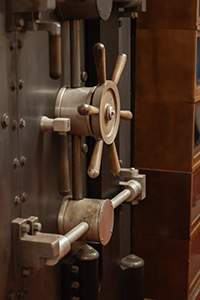
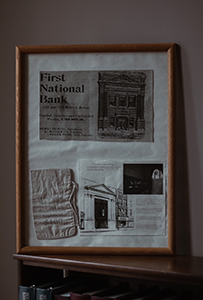
Built-in 1893, the building at 511 Wabash Avenue was designed by H. Jenny of Chicago for the First National Bank of Terre Haute. The original architecture is typical of banks at that time, a neo-classical Corinthian Greek temple design in carved limestone.
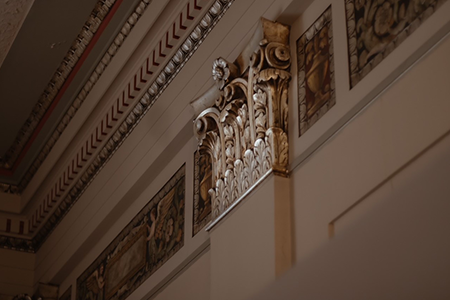
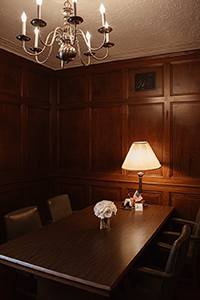
In 1928, the structure was significantly remodeled by the well-known Firm of Weary and Alford of Chicago. This was done following a bank merger, probably to update the building in keeping with newer architectural styles, which called for opening up facades and making interiors lighter. That renovation replaced the original double-hung windows and the entrance portico of the front facade with a cast-iron glazed central bay. Another pair of fluted Corinthian pilasters were added to flank the new central facade treatment. Most of the existing plasterwork and ornate oak paneling was added. Also removed during the years were the brass tellers’ cages, a big clock and chandeliers that hung at either end of the main room.
Until 1988, the building was used as a bank branch, then stood vacant until 1992, when it was acquired by the Firm. Renovations were completed in April of 1993, within eight months of purchasing the building. By taking advantage of federal tax credits for preservation, the Firm began an adaptive reuse project that spanned eight months and cost approximately $500,000, a price well below the cost of constructing a new office building.
The Terre Haute Firm of C.H. Garmong & Son, Inc. did the design work and contracting and Rowland Associates of Indianapolis completed some of the interior design.
To open the main room to its 30′ cast plaster ceiling and central skylight features installed during the1928 remodel, workers removed a suspended ceiling and ductwork. The pilaster capitals, cornice friezes and ceiling trim, when cleaned, revealed that what was thought to be gold paint on the plasterwork was silver leafing with a gold tinting. The colorful cornice friezes were cleaned, and a damaged frieze section recast. The checkerboard marble floors were cleaned.
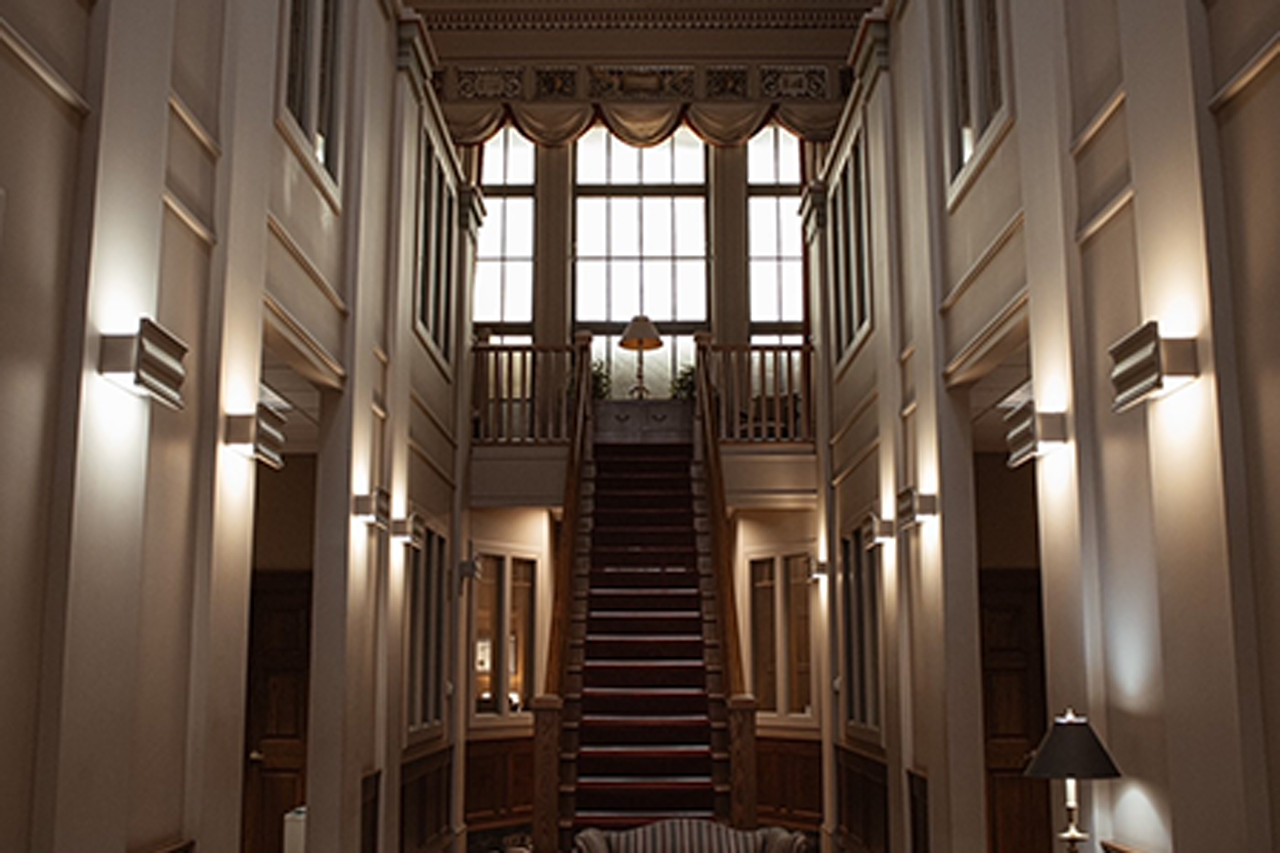
The building now holds eighteen offices and conference rooms, as well as a central conference area that overlooks the atrium. In order to keep the ceiling and skylight open, a mezzanine level was designed with two levels of offices along the open atrium. The second level offices feature clear ceiling panels to allow natural light and a view of the decorative plaster detailing along the ceiling.
Contact Us
Call our Firm at 812-232-6003 to schedule an appointment at our historic Terre Haute office,1 a Zoom conference call or use our online form.
1 Parking – The Firm provides complimentary, convenient parking for all of our clients in the parking lot at the corner of Wabash Avenue and Fifth Street in Terre Haute. Parking is for clients and staff only. In order to activate the parking gate, press the small black button located on the lower left-hand side of the gate box. Parking is for clients and staff only. All others will be towed at owner’s expense.